
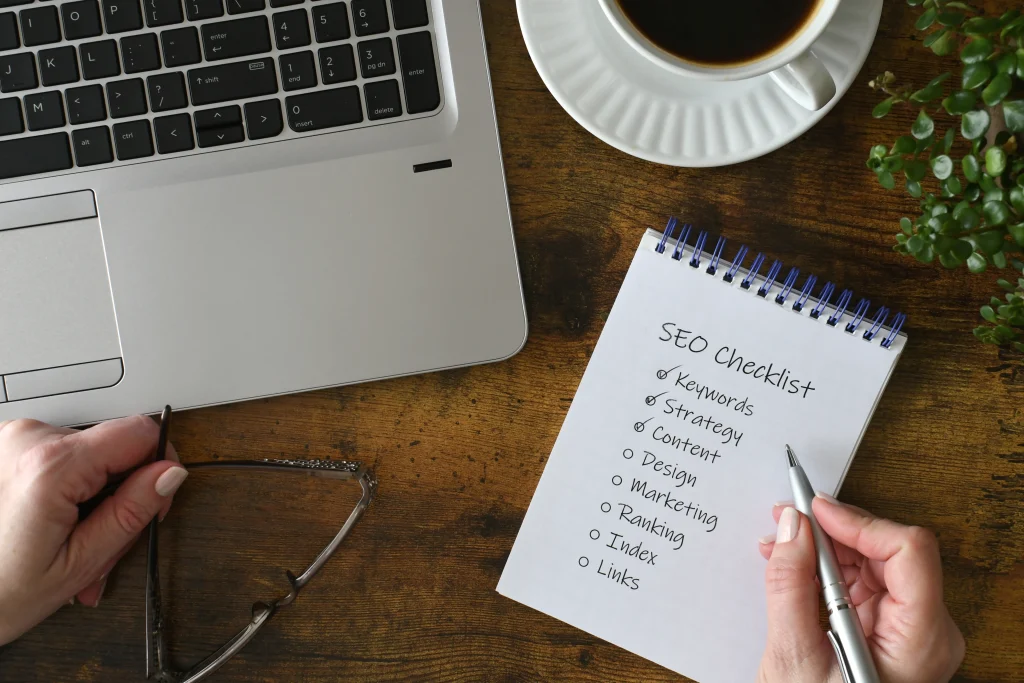
Every high performing website shares a common trait. It is built with intention. On page SEO is not decoration added after launch. It is the structure, language, hierarchy, and user experience woven directly into the page itself.
We approach optimisation as a blend of clarity, strategy, and usability. Strong rankings are earned through signals that search engines can interpret and users genuinely appreciate. What follows is a practical checklist that moves from foundational metadata to the behavioural signals that quietly influence visibility.
Metadata That Sets the Stage
Search engines begin with what they can immediately read. Metadata acts as your first introduction in search results. When crafted correctly, it improves both visibility and click through rates.
Title Tags
- Keep them within 50 to 60 characters
- Place primary keywords naturally toward the beginning
- Make them compelling, not robotic
A title tag should feel intentional, not stuffed. It must clearly reflect the page content and align with search intent.
Meta Descriptions
- 150 to 160 characters
- Action oriented language
- Reflect genuine value
Although meta descriptions are not direct ranking factors, they influence click behaviour. And click behaviour feeds broader performance signals.
Avoid duplication across pages. Each URL deserves its own metadata identity.
A technically sound page begins long before the first headline, often in elements users never see but search engines rely on to understand hierarchy and purpose.
URL Structure and Page Architecture
Clean URLs are underrated. They signal organisation to both users and crawlers.
A strong URL should:
- Be readable
- Contain relevant keywords
- Avoid unnecessary parameters or symbols
Example structure:
/on-page-seo-checklist/
Not:
/page?id=4729&ref=abc
Hierarchy matters just as much. Pages should sit within a logical structure that mirrors your service categories and content themes. Internal linking then reinforces this structure.
When pages link strategically to related services or resources, authority flows naturally across the site. This improves crawl efficiency and strengthens topic relevance.
Search engines reward sites where structure reduces friction for both bots and humans.
Content Depth and Search Intent Alignment
Content remains central, but depth does not mean volume. It means relevance and completeness.
Before writing, define:
- What question is being answered
- What stage of the buyer journey this page supports
- What related subtopics strengthen authority
A service page, for example, should not only describe the offering but address common concerns, timelines, and outcomes. Thin content struggles because it lacks context.
Use natural keyword placement. Avoid repetition for the sake of density. Semantic variations, related terms, and structured headings provide richer signals than exact match overuse.
Break up text visually:
- Short paragraphs
- Occasional lists
- Clear subheadings
This improves readability and reduces bounce risk.
When content answers intent fully, it reduces the need for users to return to search results, a behavioural pattern that algorithms quietly observe.
Header Hierarchy and Structured Formatting
Header tags organise meaning.
H1 should define the primary topic.
H2 and H3 expand logically.
This hierarchy helps search engines interpret relationships between ideas.
Good formatting includes:
- Bullet lists where clarity is needed
- Bold text for emphasis, used sparingly
- Logical progression from broad to specific
Avoid skipping heading levels randomly. Structure should feel deliberate.
Beyond headers, structured formatting includes:
Schema Markup
While not visible to users, structured data enhances search appearance through rich results. FAQs, service schema, and organisation markup can improve presentation and credibility.
Structured information allows search engines to process context more efficiently, reducing ambiguity in how pages are indexed and displayed.
Internal Linking and Contextual Authority
Internal linking is often treated as an afterthought. It should not be.
Links between related pages:
- Guide users to deeper information
- Distribute authority
- Reinforce keyword themes
Anchor text should feel natural. Avoid over optimisation. Instead of generic phrases like “click here,” use descriptive wording that reflects the linked topic.
For example, linking from a design service page to a performance optimisation page creates topical depth. It signals expertise across related disciplines.
Balanced linking also ensures important pages are not isolated. Orphan pages struggle to gain traction because search engines have limited pathways to discover and prioritise them.
Clear internal pathways often support crawl efficiency and indexing consistency, particularly as site scale increases.
UX Signals and Behavioural Metrics
Modern on page SEO extends beyond visible text. User experience now contributes to performance indirectly through engagement metrics.
Consider:
Page Speed
Slow loading pages increase abandonment. Optimised images, clean code, and efficient hosting reduce delays.
Mobile Responsiveness
Mobile first indexing means design must function seamlessly across devices.
Core Web Vitals
Metrics such as loading stability and responsiveness influence perceived quality.
Readability and Design
- Adequate spacing
- Legible font sizes
- Clear call to action placement
Search engines analyse patterns such as bounce rate, dwell time, and interaction depth. While these are not direct ranking factors in isolation, they correlate strongly with performance outcomes.
Navigation also plays a crucial role. Users should not struggle to find essential information. Clear menus, logical categorisation, and visible contact pathways reduce friction.
A well optimised page feels intuitive. Visitors move through it without confusion. That experience translates into trust.
Performance optimisation and structured delivery often work quietly beneath the surface, yet they shape how consistently pages are crawled and retained within search indexes.
From Signals to Sustainable Visibility
On page SEO is not a one time checklist. It is an evolving discipline that adapts alongside algorithm updates and user expectations.
Strong metadata introduces clarity.
Structured architecture improves crawlability.
Comprehensive content satisfies intent.
Internal links reinforce authority.
User experience sustains engagement.
Together, these elements create a cohesive optimisation strategy that balances technical precision with human centred design.
We build websites with this integrated mindset. Visibility is never accidental. It is the result of deliberate structure, informed content decisions, and performance awareness across every page.
When optimisation aligns with usability, search engines respond accordingly, and users stay longer. That combination defines sustainable growth in organic search.


