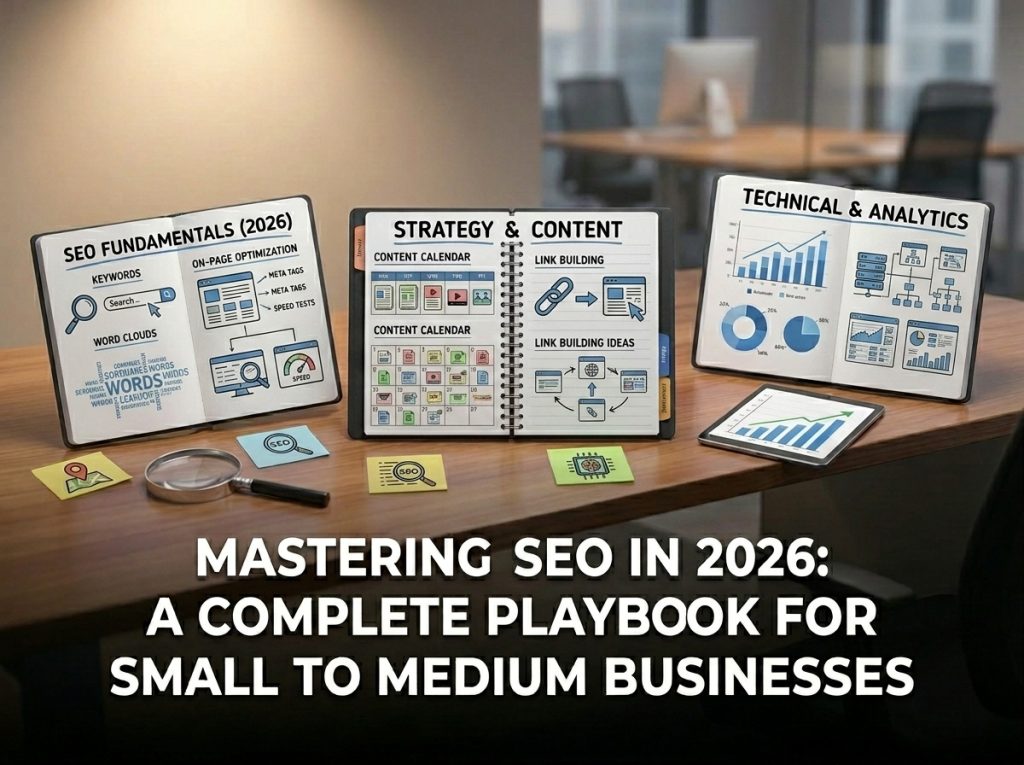
Navigating SEO in 2026 requires more than just updating keywords or chasing rankings. The landscape has evolved—search engines prioritize user intent, technical efficiency, and meaningful engagement, while emerging behaviors like voice and visual search are shaping the way audiences discover businesses.
For small to medium enterprises, mastering these dynamics can feel overwhelming, but a structured approach makes it manageable. At Zenexa, we focus on helping businesses build strategies that balance creativity with precision, ensuring content, technical setups, and optimization practices work together to drive measurable growth. This playbook is designed to guide you through the essentials, offering actionable insights that support long-term visibility and audience engagement.
Decoding Search Intent: Understanding Your Audience’s Needs
SEO in 2026 begins with a simple truth. Rankings follow relevance. And relevance begins with intent.
Every search falls into a pattern. Someone wants to learn something. Someone wants to compare options. Someone is ready to buy. The words may look similar, yet the motivation behind them is entirely different. A page that aligns with intent answers not only the query but the underlying question driving it.
There are four core intent categories that still dominate search behavior:
- Informational
- Navigational
- Commercial investigation
- Transactional
Small to medium businesses often focus heavily on transactional keywords, assuming these bring faster returns. While that can work, ignoring informational and comparison-based queries limits authority building. A well-structured strategy maps content across the entire decision journey.
When analyzing intent, look beyond search volume. Study the current top-ranking pages. Are they guides, product pages, case studies, or videos? This reveals what search engines believe satisfies the query best. Matching that format is often more powerful than simply inserting keywords.
Another layer involves clustering related terms under thematic pillars. Strong keyword mapping techniques that evolve with search behavior ensure that one page does not compete against another. This prevents cannibalization and strengthens topical depth.
Intent also shapes tone and structure. Informational content benefits from layered explanations and examples. Commercial intent thrives on comparison tables, testimonials, and benefit-driven sections. Transactional pages require clarity, trust signals, and frictionless navigation.
Search engines now evaluate satisfaction signals closely. If users return quickly to results, it indicates misalignment. Aligning with intent reduces bounce rates, improves dwell time, and naturally strengthens visibility.
Mastering search intent is not about guessing what people type. It is about understanding why they type it and designing content that feels like the right answer at the right moment.
Content Architecture That Scales
A website that grows without structure eventually collapses under its own weight. Pages overlap. Topics compete. Search engines hesitate. Users get lost.
Content architecture solves this before it becomes visible damage.
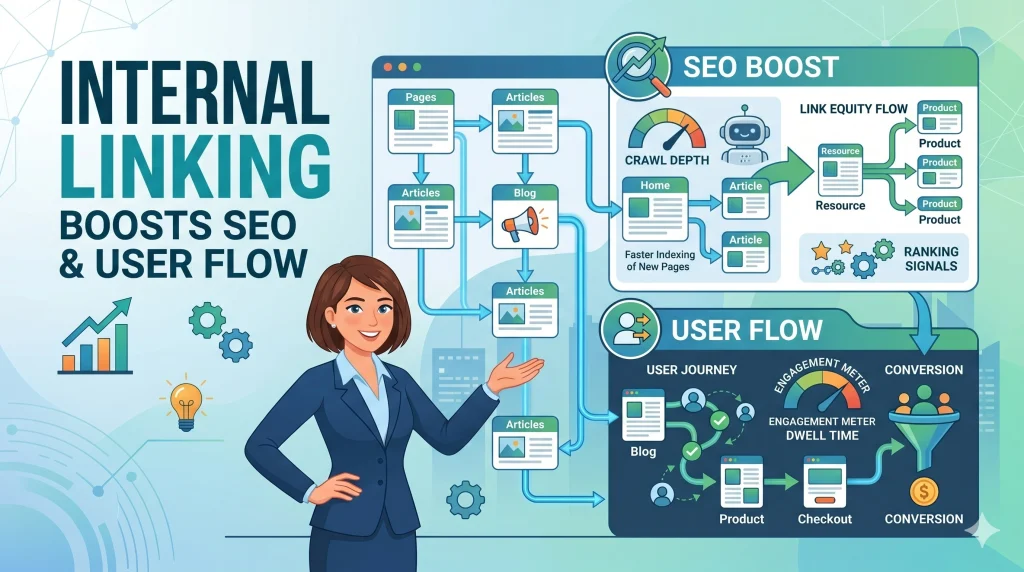
Think of your website as a digital city. Pillar pages act as main roads. Supporting articles branch out like organized streets. Internal links connect neighborhoods. When this structure is intentional, search engines crawl efficiently and users navigate intuitively.
Start with topical clusters. One central page should comprehensively address a broad subject. Supporting pages dive into specific angles. Instead of publishing isolated blog posts, create ecosystems of information that reinforce each other. This builds authority and distributes ranking strength across the site.
Structure also impacts crawl depth. Important pages should never sit buried five clicks deep. A clear hierarchy helps search engines prioritize content. Logical navigation menus, breadcrumb trails, and contextual linking all signal importance.
Technical performance cannot be separated from architecture. Broken links, duplicate pages, and inconsistent URL structures weaken the entire framework. Simplified technical foundations that business owners can actually understand and maintain make scalability sustainable rather than overwhelming.
Avoid content cannibalization by assigning each page a clear primary focus. When multiple pages target the same intent, search engines struggle to determine which one deserves visibility. A mapped plan prevents internal competition.
As the site expands, regular audits become essential. Identify outdated content, merge overlapping articles, and refine internal links to support high-converting pages. Periodic performance reviews tied to meaningful growth metrics ensure structure evolves alongside strategy.
Scalable architecture does not require complexity. It requires intention. When content is organized with clarity and purpose, growth feels stable instead of chaotic. And in competitive search landscapes, stability often becomes the silent advantage that compounds over time.
Optimizing for Voice and Visual Search

Search no longer lives only in a typed box.
It happens in kitchens through smart speakers. It happens on sidewalks through mobile cameras. It happens in fragmented, conversational phrases that rarely resemble traditional keyword strings. Businesses that adapt to voice and visual search are not chasing trends. They are responding to behavioral shifts.
Voice queries tend to be longer and more natural. Instead of typing “best accounting software Perth,” a user might ask, “What’s the best accounting software for a small business near me?” This shift increases the importance of conversational phrasing, question-based headings, and concise answers placed high within a page.
Featured snippets and direct answer boxes dominate voice responses. Structuring content with clear definitions, short summaries, and logically organized subheadings increases the likelihood of being selected. FAQ sections can help, but they must feel integrated rather than artificially stuffed.
Visual search introduces another layer. Platforms now allow users to upload images to find similar products or information. Optimizing high-quality images with descriptive alt text, relevant file names, and contextual captions strengthens visibility in image-based results.
There is also a strong local dimension. Many voice searches carry location-based intent. Phrases like “near me” or “open now” signal immediate action. Strategic local optimization approaches that align with community-based search behavior quietly support visibility in these moments.
Data consistency plays a hidden role. Search engines rely on structured signals to interpret information correctly. Clear technical configurations and structured data implementation improve how content is interpreted across devices and formats.
Finally, performance matters more than ever. Voice results prioritize fast-loading, mobile-friendly pages. Slow sites rarely surface in immediate-answer environments.
Voice and visual search reward clarity. When content mirrors the way people actually speak and search in 2026, it becomes easier for algorithms to surface it naturally, without force or manipulation.
Mobile-First Design: Beyond Responsive Layouts
Mobile-first is no longer a design preference. It is the foundation of modern search visibility.
Search engines primarily evaluate the mobile version of a website when determining rankings. If that experience feels compressed, cluttered, or slow, performance suffers regardless of how polished the desktop site appears. Responsive design is only the starting point. True mobile optimization goes deeper.
Speed leads the conversation. Mobile users operate in motion, often on unstable networks. A delay of even a few seconds increases abandonment rates dramatically. Compressing images, reducing script bloat, and leveraging caching mechanisms directly influence how users engage and how algorithms interpret satisfaction signals.
Navigation must feel effortless. Consider how thumbs interact with screens.
- Buttons should be large and spaced clearly
- Key information must appear without excessive scrolling
- Forms should minimize typing friction
- Pop-ups should never obstruct core content
Mobile-first also changes content formatting. Long, dense paragraphs discourage engagement. Strategic spacing, concise headings, and clear visual hierarchy improve readability without sacrificing depth.
Technical health remains intertwined with mobile performance. Crawl errors, unoptimized scripts, and rendering issues can block search engines from properly indexing mobile content. Streamlined backend configurations that simplify technical optimization for business owners create long-term stability rather than short-term fixes.
User signals now carry measurable weight. Bounce rates, scroll depth, and session duration all indicate whether the mobile experience satisfies intent. Tracking the right performance indicators instead of vanity metrics helps refine design decisions with precision.
Mobile-first is not about shrinking a desktop site. It is about rethinking structure, speed, and usability from the smallest screen outward. When the mobile experience feels natural and frictionless, rankings tend to follow as a byproduct of genuine user satisfaction.
The Power of Rich Snippets and Structured Data
Search results in 2026 are no longer simple blue links. They are layered, interactive, and information dense. Star ratings appear beneath product pages. FAQs expand directly within results. Event dates, pricing, and availability surface before a user even clicks.
These enhancements are powered by structured data.
Structured data is a standardized format that helps search engines interpret the context of your content. Instead of guessing whether a number refers to a price, rating, or statistic, schema markup explicitly defines it. This clarity improves how pages are displayed in search results and increases eligibility for rich snippets.
Not every page needs schema, but high impact areas benefit significantly:
- Product pages with pricing and reviews
- Service pages with FAQs
- Articles that answer specific questions
- Local business pages with contact details and operating hours
When implemented correctly, structured data can increase click-through rates because listings occupy more visual space and convey trust at first glance. It does not directly guarantee rankings, yet it enhances visibility in competitive search environments.
Accuracy is critical. Mismatched schema or outdated information creates inconsistencies that search engines flag quickly. Maintaining alignment between on-page content and structured markup protects credibility.
There is also a strategic layer. Rich snippets often surface for long-tail and conversational queries. Precise keyword targeting aligned with evolving search patterns increases the likelihood of appearing in these enhanced formats.
Technical integration should not feel overwhelming. Clean implementation, error monitoring, and regular testing keep markup functional without overcomplication. Clear technical systems that simplify backend optimization ensure schema works quietly in the background while content does the storytelling.
Structured data acts like translation software between your website and search engines. When search engines understand your content with precision, they are more confident presenting it prominently, and that confidence often translates into stronger organic performance over time.
Hyper-Local SEO Strategies for Community Engagement
Visibility in 2026 is not only about competing globally. For many small to medium businesses, growth depends on becoming unmistakably present within a defined geographic radius. Hyper-local SEO narrows the focus from broad city targeting to neighborhood-level relevance.
Search engines now interpret proximity with increasing sophistication. They evaluate not only where a business is located, but how consistently that location is referenced across digital properties. Address details, service areas, localized landing pages, and region-specific content all contribute to authority within a physical space.
Community alignment strengthens rankings in subtle ways. Publishing content that reflects local events, partnerships, or region-specific concerns signals authenticity. When users recognize familiar landmarks or references, engagement improves. Search engines interpret that engagement as satisfaction.
Reviews play a powerful role. Consistent, genuine feedback tied to a specific area builds credibility in map listings and local packs. The language customers use in reviews often mirrors search queries, reinforcing relevance organically.
Location pages require careful construction. Thin, duplicated pages created for multiple suburbs rarely perform well. Instead, each page should reflect meaningful differentiation, whether through service variations, case examples, or localized testimonials.
Proximity-based searches frequently carry high commercial intent. Someone searching for a service near them is often ready to act. Aligning calls to action with that urgency increases conversion potential.
Behind the scenes, consistent data accuracy remains critical. Business name, address, and contact details must match across directories and platforms. Strategic local optimization methods that prioritize consistency and community relevance quietly reinforce authority.
Performance measurement also shifts locally. Tracking visibility in map results, direction requests, and region-specific traffic offers clearer insights than broad national metrics. Monitoring the right success indicators tied to tangible outcomes ensures local efforts translate into real growth.
Hyper-local SEO thrives on authenticity. When a business genuinely integrates itself into its surrounding community, search visibility often follows as a natural extension of real-world presence.
Link Earning and Authority Building
Why do backlinks still matter in 2026?
Because search engines continue to treat them as signals of trust. When reputable websites reference your content, it functions like a vote of confidence. Not all links carry equal weight, though. A single contextual link from an authoritative, relevant source can outperform dozens of low quality directory placements.
Is buying links a shortcut worth taking?
Short term gains often collapse under long term penalties. Algorithm updates are increasingly precise in detecting unnatural patterns. Sustainable authority grows through credibility, not manipulation.
So what actually works now?
Original research, insightful commentary, data driven resources, and genuinely useful tools attract organic references. When content solves a problem better than competitors, it becomes link worthy without aggressive outreach.
Does internal linking matter too?
Absolutely. Internal links distribute authority across your own pages and guide search engines toward priority content. Strategic linking also improves user navigation, which strengthens behavioral signals.
How can smaller businesses compete with established brands?
By narrowing focus. Instead of chasing broad industry keywords, build authority within a defined niche. Publishing consistent, high value content around specialized topics builds depth. Focused keyword strategies that align tightly with audience intent increase the chances of earning relevant links naturally.
How do you know if your authority efforts are working?
Look beyond link counts. Monitor referral traffic, domain growth trends, and engagement metrics tied to linked pages. Tracking meaningful performance indicators rather than surface-level numbers reveals whether authority translates into visibility and conversions.
Is outreach still necessary?
Yes, but it should feel relational, not transactional. Building partnerships, contributing expert insights, and collaborating with industry platforms foster long term credibility.
Authority is cumulative. Each valuable link strengthens your digital reputation. Over time, that reputation becomes an invisible asset that supports rankings across your entire website.
Content Refresh and Evergreen Updates
Publishing content is not the finish line. In many cases, it is the starting point.
Search landscapes shift constantly. Competitors expand their pages. New statistics emerge. User expectations evolve. A page that ranked strongly a year ago can quietly decline without visible warning. Content refresh strategies prevent this slow erosion.
The first step is identifying which pages deserve attention. High-impression, declining-click pages often signal opportunity. They are visible but underperforming. Slight refinements can reignite momentum.
Updating content does not always mean rewriting everything. Sometimes it involves tightening introductions, improving clarity, or adding recent examples. Other times it requires expanding sections to match current search depth. If competitors now provide comprehensive guides, a thin article will struggle to compete.
Data accuracy plays a significant role. Outdated numbers reduce credibility. Fresh statistics, updated case references, and modern examples signal relevance to both users and search engines.
Intent alignment should also be reassessed. A keyword that once reflected informational intent may now display more commercial results. Adapting structure to match current ranking patterns protects visibility. Ongoing keyword evaluation aligned with evolving search behavior ensures updates are strategic rather than cosmetic.
Internal linking opportunities often emerge during refresh cycles. Newer high-performing pages can support older foundational content. This strengthens topical authority and improves crawl efficiency.
Performance tracking guides prioritization. Pages generating conversions or qualified traffic deserve earlier updates than low-impact articles. Measuring results through actionable growth metrics keeps refresh efforts focused on business outcomes, not vanity improvements.
Evergreen content is not static. It remains valuable because it is maintained. When businesses treat their content library as an evolving asset instead of a one-time task, rankings become more resilient and competitive positioning grows stronger over time.
User Experience Signals That Influence Rankings
Search engines have grown increasingly attentive to behavior. Rankings are no longer shaped only by keywords and links. They are shaped by how real people interact with a page once they land on it.
If visitors arrive and leave within seconds, something is misaligned. It could be slow loading speed. It could be confusing structure. It could be content that fails to answer the query clearly. Whatever the cause, search engines interpret rapid exits as dissatisfaction.
Dwell time, scroll depth, and repeat visits all offer insight into engagement quality. While these signals are not always direct ranking factors in isolation, patterns across them paint a broader picture of user satisfaction. Pages that hold attention tend to remain visible.
Clarity plays a central role. Headlines must set accurate expectations. Introductions should confirm relevance quickly. Visual hierarchy guides the eye and reduces cognitive strain. When readers feel oriented, they stay longer.
Trust also influences behavior. Secure browsing environments, transparent policies, and credible references encourage interaction. Small cues such as testimonials, case examples, and clear contact pathways reduce hesitation.
Technical stability cannot be ignored. Pages that shift during loading or display intrusive interstitials disrupt experience. Clean backend performance and simplified technical optimization practices protect usability while strengthening crawl efficiency.
There is also a strategic dimension. Engagement metrics reveal where intent may be misaligned. If traffic arrives but conversions stall, deeper analysis is required. Evaluating performance through meaningful success indicators helps identify whether experience improvements translate into measurable growth.
Ultimately, user experience signals reflect a simple principle. When a website genuinely serves its audience with clarity, speed, and trust, engagement improves naturally. Search engines increasingly reward that authenticity, making user satisfaction one of the most powerful SEO advantages available in 2026.
Tracking and Adapting: Your SEO Success Dashboard
SEO without measurement is guesswork. In 2026, sustainable growth depends on disciplined tracking and informed adjustments rather than assumptions.
A strong SEO dashboard does not overwhelm with endless charts. It highlights indicators that connect visibility to business impact. Rankings alone are not enough. Traffic alone is not enough. The focus must shift toward outcomes.
Key areas every business should monitor include:
- Organic traffic trends segmented by landing page
- Click through rates from search results
- Conversion rates tied to organic sessions
- Keyword position movements for priority topics
- Engagement metrics such as time on page and scroll behavior
Each metric tells a different part of the story. Rising impressions with stagnant clicks may signal weak meta descriptions. High traffic with low conversions could indicate intent mismatch. Strong rankings with declining engagement might point to outdated content.
Dashboards should also compare branded versus non-branded traffic. Growth in non-branded visibility reflects expanding authority beyond existing audiences. This is often a sign that broader search strategies are working effectively.
Forecasting plays a role as well. By analyzing historical data patterns, businesses can anticipate seasonal shifts and allocate resources strategically rather than reactively.
Alignment matters. Keyword strategies that evolve alongside real search behavior provide clarity on which pages deserve deeper investment. Similarly, measuring performance using meaningful KPIs rather than vanity metrics ensures efforts remain tied to revenue and growth objectives.
Adaptation is the defining principle. Algorithms shift. Competitors refine tactics. Audience expectations change. A living dashboard allows businesses to respond with precision instead of panic.
When tracking is intentional and strategic, SEO becomes less mysterious. It transforms into a measurable system where insights guide action, and action compounds into sustained digital growth.
SEO is no longer a static checklist—it’s an ongoing, adaptive process that blends strategy, technical finesse, and user-focused content. From aligning pages with search intent to maintaining content relevance, every element contributes to sustained performance. At Zenexa, we approach SEO as a holistic journey, helping businesses implement practices that evolve alongside algorithms, user expectations, and industry trends. By focusing on data-driven insights, structured planning, and continuous improvement, we empower our clients to achieve visibility that is not only measurable but meaningful, ensuring their online presence grows in both reach and impact.